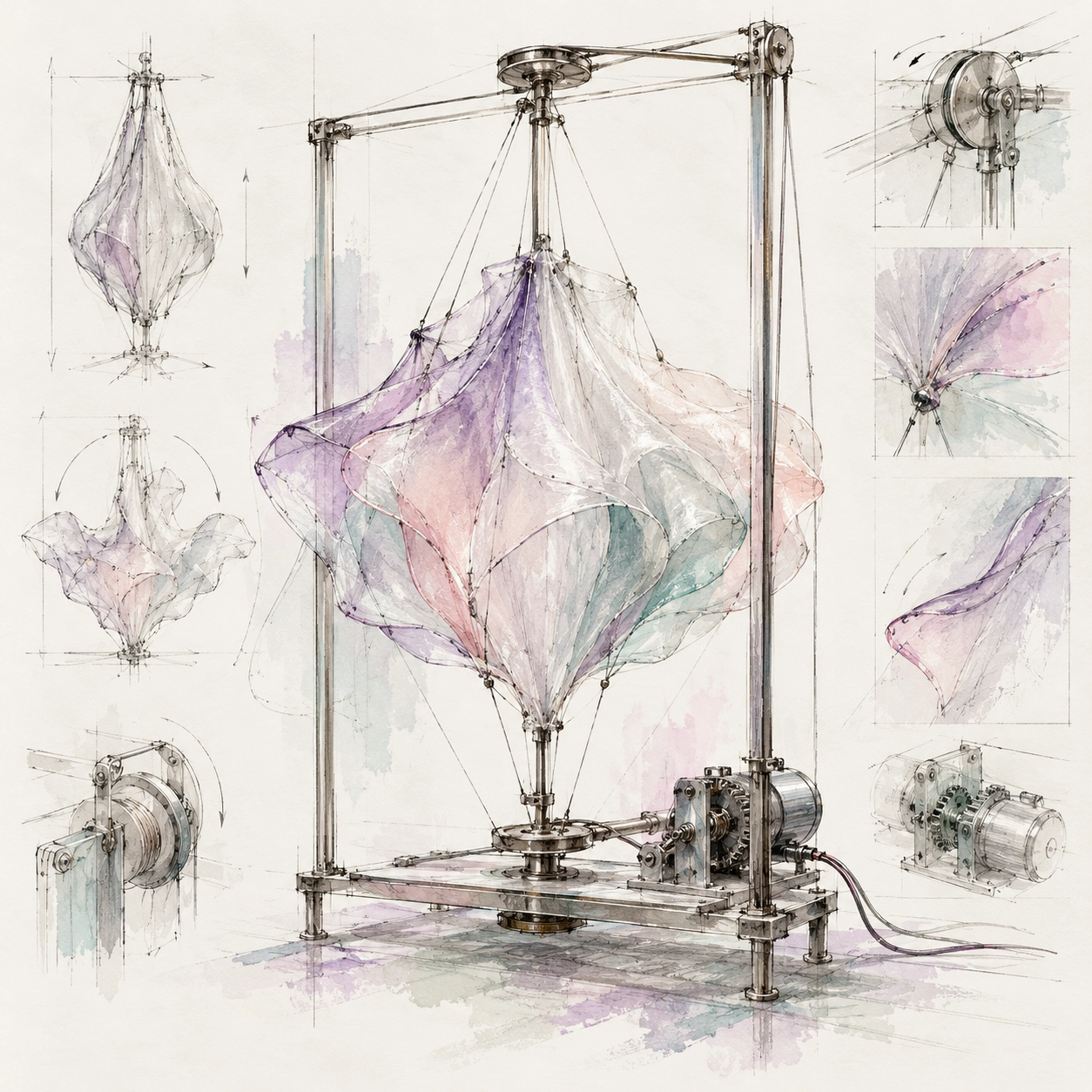
Kinetic Studies
From simple mechanisms to expressive movement
An artistic research thread investigating how simple mechanical systems can produce movement that is perceived as gesture, rhythm, behaviour and presence.
Research questions
- Q1
How can simple mechanical mechanisms produce movement that feels expressive rather than merely functional?
- Q2
At what point does repetition, delay, acceleration or hesitation begin to read as behaviour?
- Q3
How can small autonomous kinetic modules combine into larger collective or sculptural systems?
Process
- Mechanism
- Motion
- Rhythm
- Behaviour
- Perception
Movement as material
Kinetic Studies investigates movement as a material in itself.
The starting point is mechanical: motors, spools, pulleys, cables, guides, counterweights, supports, switches and simple forms of actuation. But the research question is not only whether a mechanism works.
It is what kind of movement it produces.
A motor can pull.
A spool can wind.
A cable can lift or release a suspended element.
A microswitch can define a limit.
A repeated cycle can become rhythm.
A pause can become hesitation.
A small mechanical action can begin to be read as gesture.
The research therefore moves continuously between engineering and perception. A movement may be technically identical while feeling completely different depending on its speed, acceleration, repetition, timing, amplitude or relation to gravity.
From mechanism to behaviour
The research follows a simple chain:
Mechanism → Motion → Rhythm → Behaviour → Perception
A mechanism creates a physical possibility.
Motion gives that mechanism a trajectory.
Rhythm organises movement through time.
Repeated patterns begin to suggest behaviour.
Behaviour is finally completed in perception: by the viewer who reads tension, urgency, hesitation, insistence, collapse, anticipation or calm into the moving object.
The aim is not to imitate human emotion literally.
It is to investigate the minimum mechanical conditions under which movement starts to acquire character.
Mau Mau — the first kinetic module
The first dedicated research object in this thread is currently being developed under the working name Kinetic Module / Mau Mau.
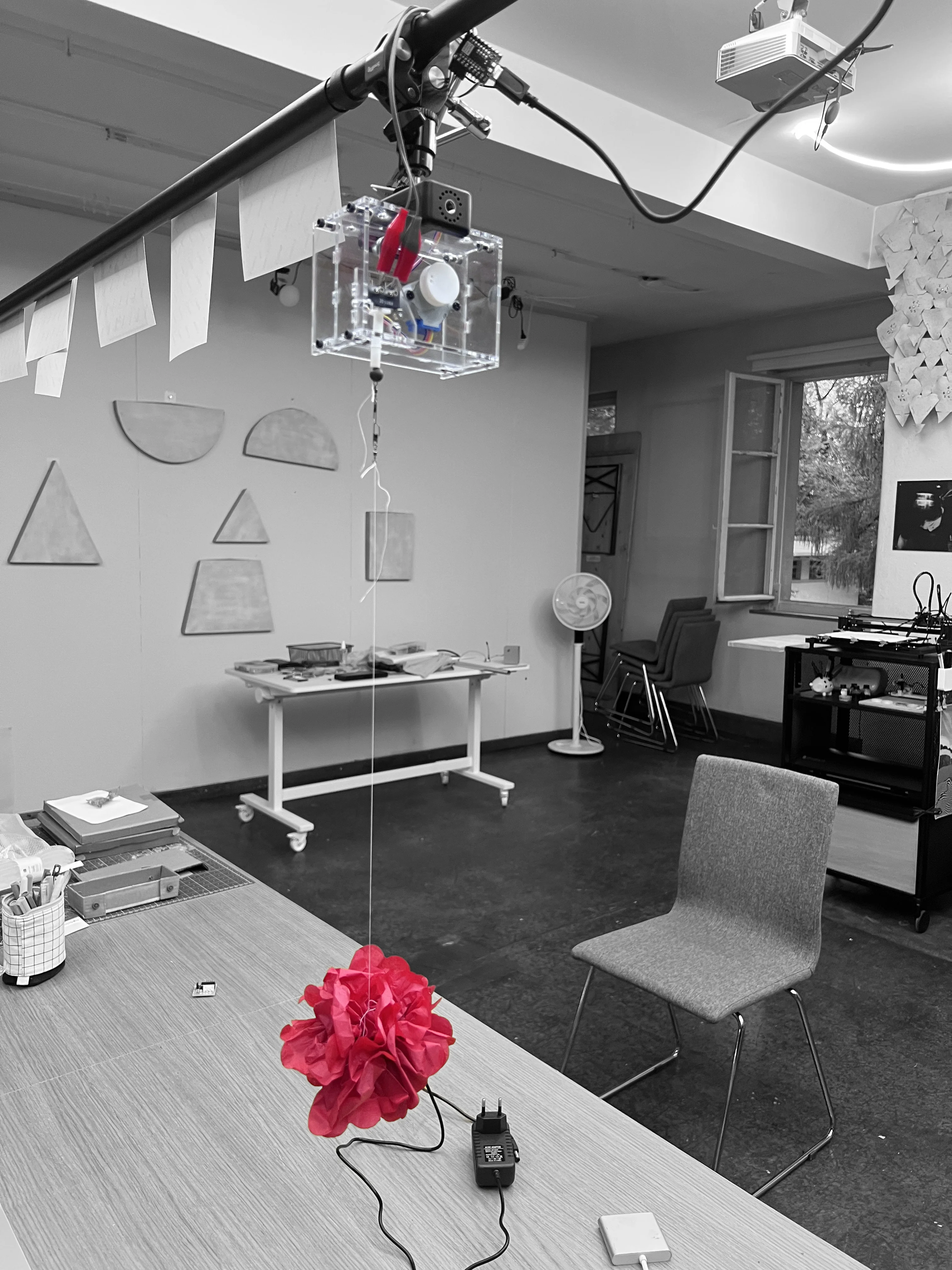
Mau Mau is a compact electromechanical module built around a stepper motor, spool, guide system and homing mechanism. Its current development combines:
- a 28BYJ-48 stepper motor
- ULN2003 motor driving
- ESP32-S3 Super Mini control
- a microswitch used for homing
- a 3D-printed spool
- a laser-cut enclosure system
- cable / filament routing
- parametric mechanical design in Rhino and Grasshopper
- electronics and PCB development in KiCad
The current files document Mau Mau primarily as an experimental mechanical and electronic platform. Its final expressive behaviour is still being developed.
That unfinished state is useful.
The module allows movement to be studied before it becomes part of a larger sculpture. Direction, travel, speed, pauses, homing, tension and repetition can be isolated and tested as individual variables.
Mau Mau is therefore not intended as a finished artwork on its own. It is the first member of a possible family of kinetic modules.
Why modules
Artificial Emotion will likely require more than one kind of movement.
A modular system makes it possible to develop those movements incrementally.
Instead of designing a complete sculpture and then solving all of its mechanisms at once, each module can become a research object with a specific mechanical capacity.
One module might pull vertically.
Another might introduce lateral tension.
Another might rotate, vibrate, release, oscillate or work against a counterweight.
The module becomes a unit of experimentation.
This allows different questions to remain separate long enough to be understood:
- How much travel does a movement need?
- What changes when the same action is slower?
- When does repetition become mechanical and predictable?
- When does irregularity begin to feel intentional?
- What happens when several modules move together?
- When does synchronisation feel organised?
- When does desynchronisation feel alive?
Rhythm, delay and hesitation
A central question in Kinetic Studies is how temporal qualities change the reading of movement.
Mechanical systems often optimise for consistency.
Artistic behaviour may require the opposite.
A movement can become expressive through:
- acceleration
- deceleration
- pauses
- delayed response
- incomplete movement
- repetition
- asymmetry
- variation
- oscillation
- interruption
- gradual release
A perfectly repeated cycle may read as machine-like.
A movement that slows before reaching its limit may feel cautious.
A brief reverse movement can look like correction.
A delayed response can look like hesitation.
These readings are projections made by the viewer, but the mechanical system creates the conditions for them to emerge.
Gravity, suspension and return
Many of the current mechanisms operate through pulling rather than pushing.
This makes gravity part of the system.
A suspended object can be lifted by a motor and returned by its own weight. A counterweight can change the apparent effort of a movement. Elasticity can create delayed return. A line passing through a pulley can separate the position of the motor from the visible movement of the object.
These arrangements are technically simple, but perceptually rich.
They also allow mechanisms to remain physically distributed across the installation: motors, cables, hanging bodies and moving elements do not need to occupy the same place.
This becomes especially relevant as Artificial Emotion grows from individual tests toward larger kinetic compositions.
Building a vocabulary of movement
Kinetic Studies is developing a vocabulary through repeated tests rather than through fixed definitions.
Examples may include:
- steady pull → lifting / contraction
- slow release → yielding / collapse
- short repeated travel → trembling / insistence
- alternating direction → oscillation / uncertainty
- pause before reversal → hesitation
- multiple unsynchronised modules → distributed behaviour
- shared rhythm → collective movement
These associations are not universal.
They are observations to be tested.
The same mechanical movement can be read differently depending on material, scale, sound, context and the presence of other moving elements.
Research objects
The thread develops through physical prototypes, mechanisms and motion tests.
Some remain bench experiments.
Some become reusable kinetic modules.
Some may later be integrated into larger works.
The research record can include:
- actuator tests
- motor and spool systems
- homing and limit mechanisms
- suspension experiments
- pulley arrangements
- tension systems
- counterweight studies
- timing and rhythm tests
- firmware experiments
- movement diagrams
- failures and mechanical limitations
- video documentation of behaviour
These objects are not only engineering steps.
Each one tests a relationship between mechanism and perception.
Connection to Artificial Emotion
Kinetic Studies provides one of the behavioural foundations of Artificial Emotion.
If Soft Mechanics investigates how material structure can become a moving body, Kinetic Studies asks how that body moves through time.
The thread focuses on the transition from actuation to gesture:
from a motor turning,
to a line moving,
to a suspended object responding,
to a repeated sequence becoming rhythm,
to rhythm being perceived as behaviour.
As more kinetic modules are developed, the research can expand from isolated movement to coordination, interference and collective behaviour.
The larger question remains open:
When does movement stop being read as motion and begin to be read as intention?
Studies
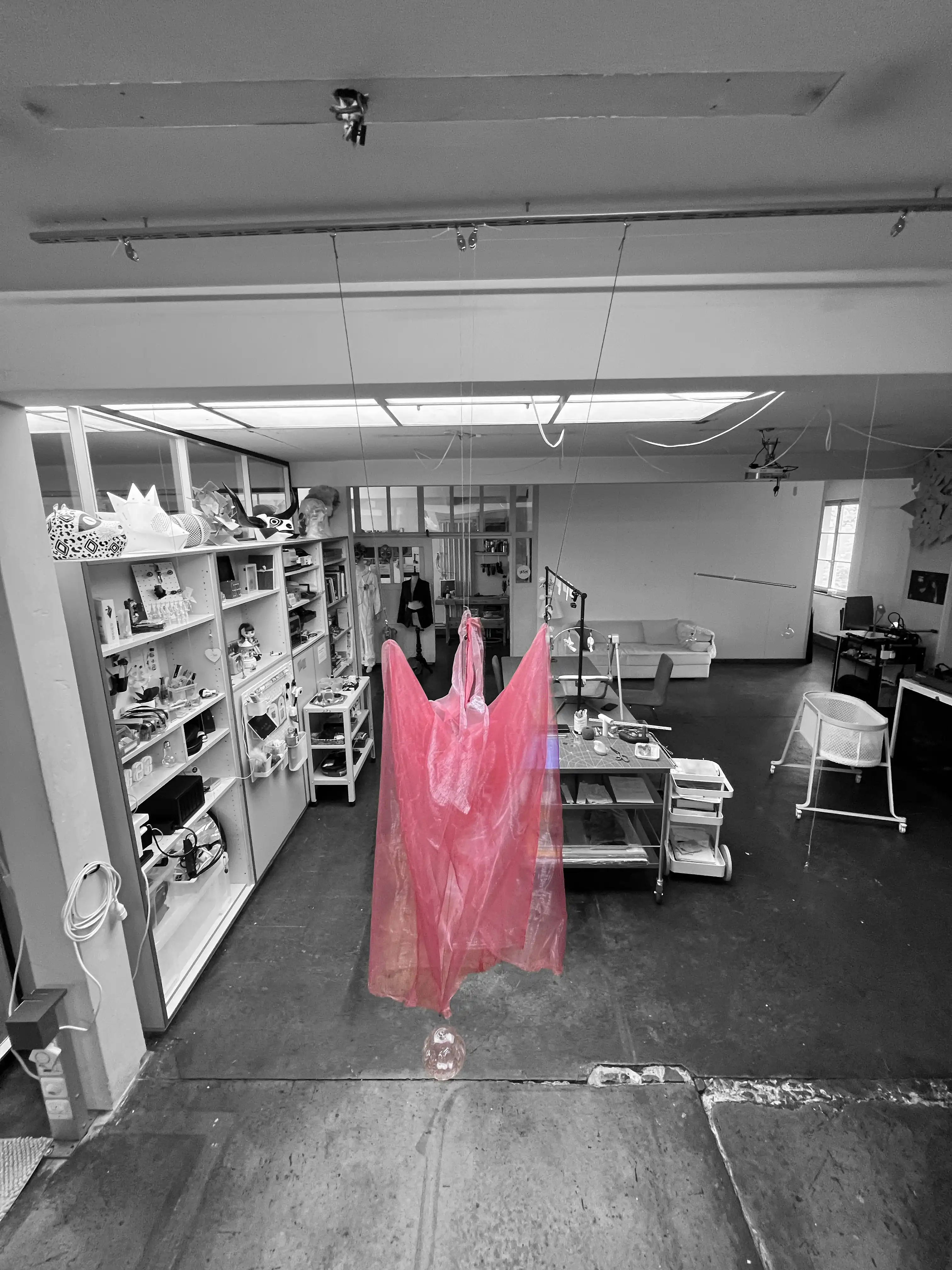 experimentCounterweighted Textile MechanismAn experimental organza structure uses two independently routed pulley-and-counterweight lines, a fixed waist, and an adjustable link between its moving upper and lower sections to explore textile contraction and expansion.
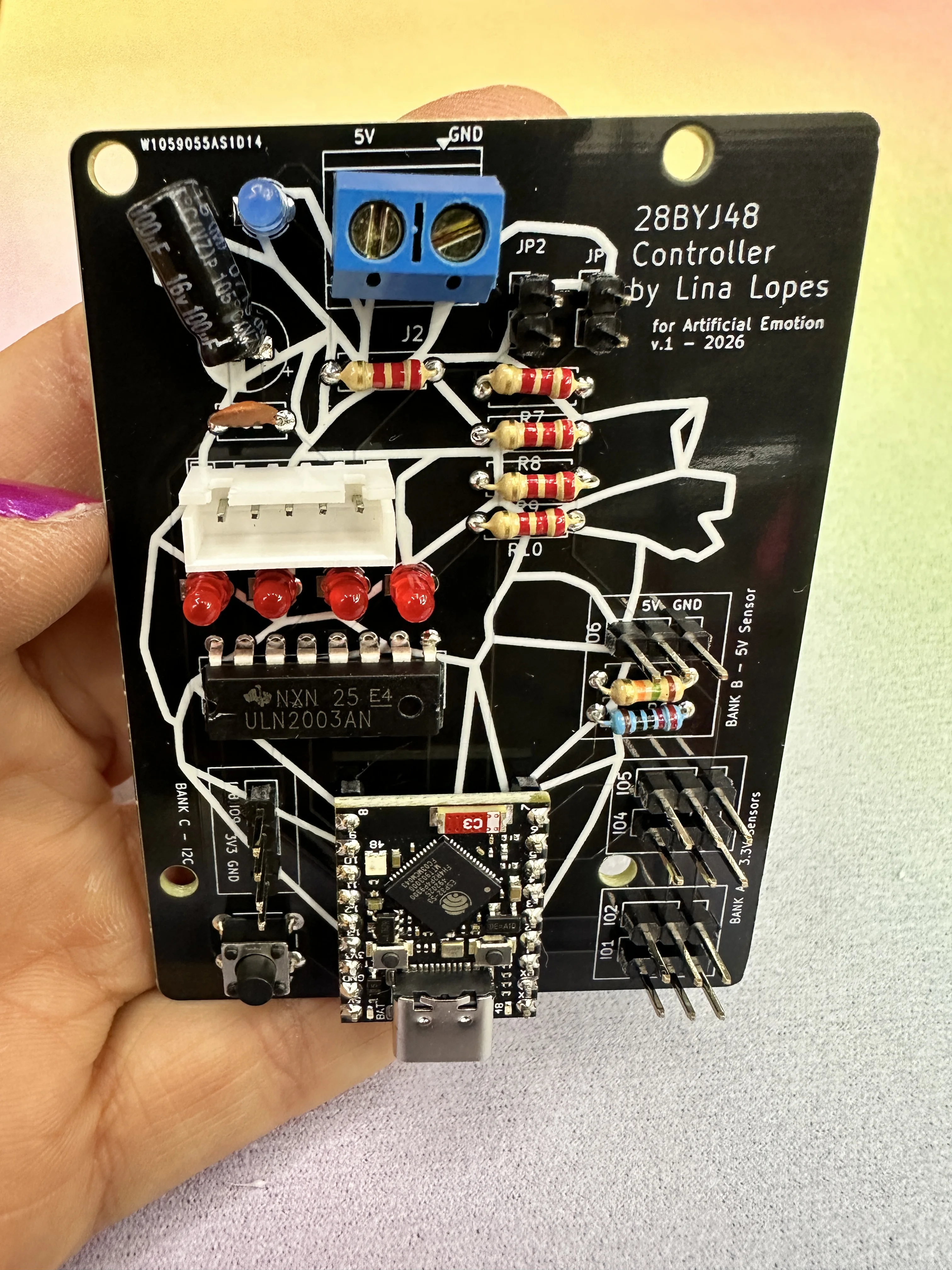 experimentArtificial Emotion Controller — First Assembly and TestsThe first assembled Artificial Emotion Controller moved beyond circuit validation to reveal something more interesting - a single user button can become a compact physical interface for exploring different kinetic behaviours. Initial tests also exposed reversed 5V and GND silkscreen labels at the external power input, a small but consequential usability error now corrected in the design.
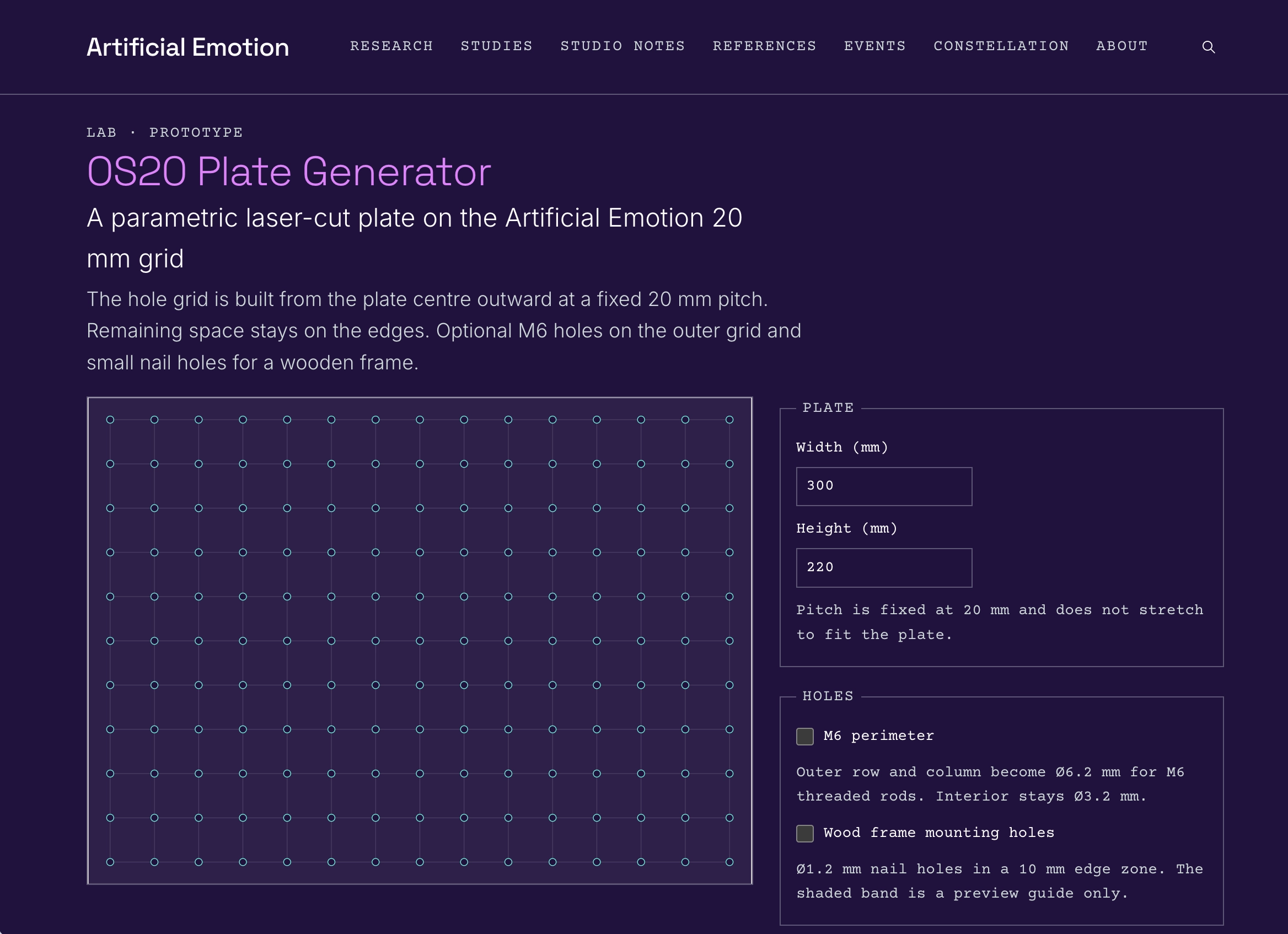 experimentOS20 Plate GeneratorA small fabrication tool for generating laser-cut plates from the Artificial Emotion 20 mm modular grid, with optional edge conditions for wooden frames and M6 structural connections.
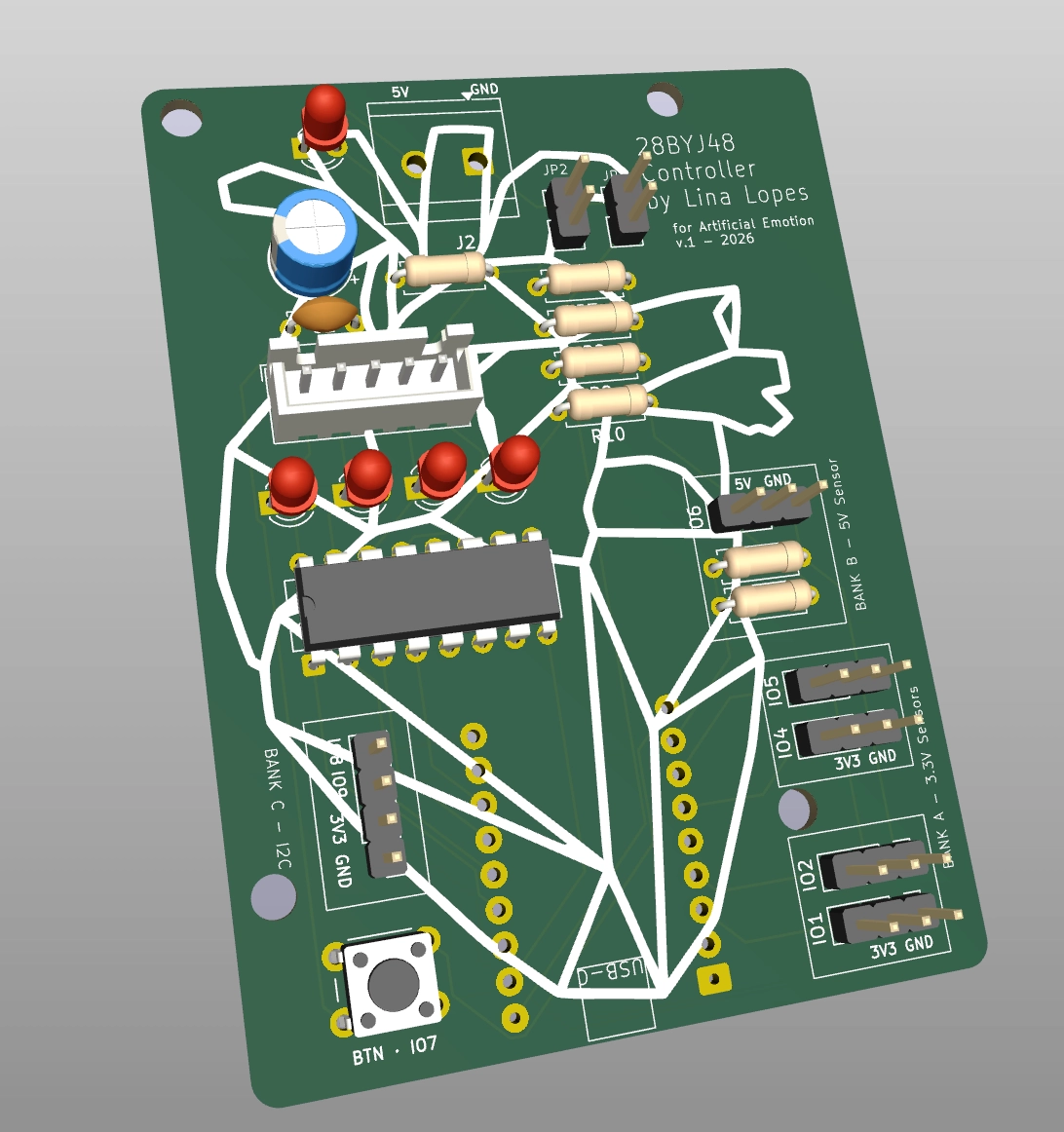 experimentArtificial Emotion Controller — Designing a Dedicated PCBDesigning the first dedicated Artificial Emotion controller in KiCad, a manually assembled, through-hole PCB built around an ESP32-S3 SuperMini, a ULN2003A driver, one 28BYJ-48 stepper motor and configurable sensor connections. The aim is to make the electronics easier to reuse so each new kinetic experiment can begin with movement rather than wiring.
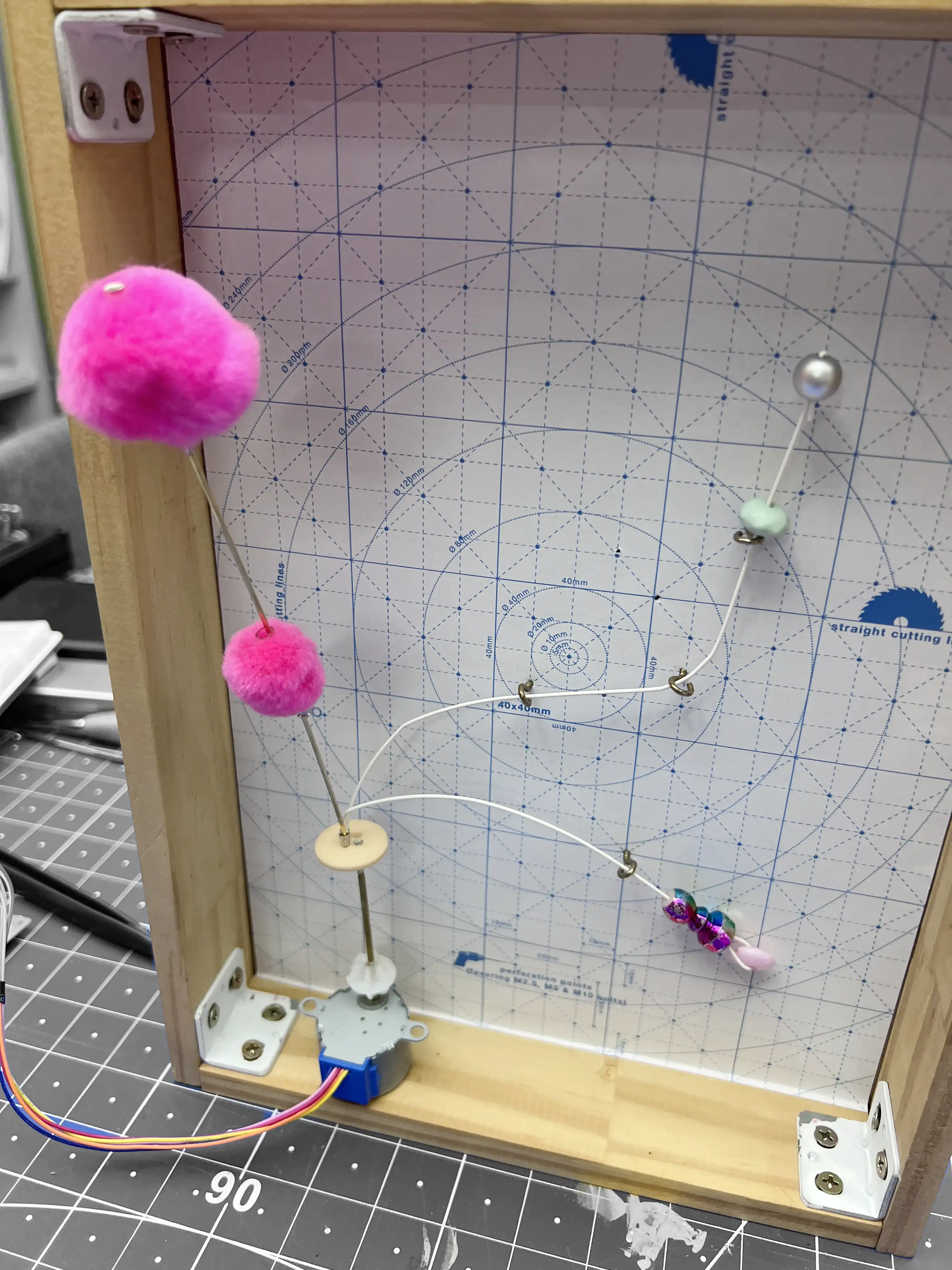 experimentKinetic Planes — After Abraham PalatnikInspired by Abraham Palatnik's C-15, this study uses a reused wooden frame, an OS20 construction grid, nylon rods and a 28BYJ-48 stepper motor to investigate how a simple reversing rotation can produce flexible, layered motion—and how improvised connections can become reusable parametric parts.
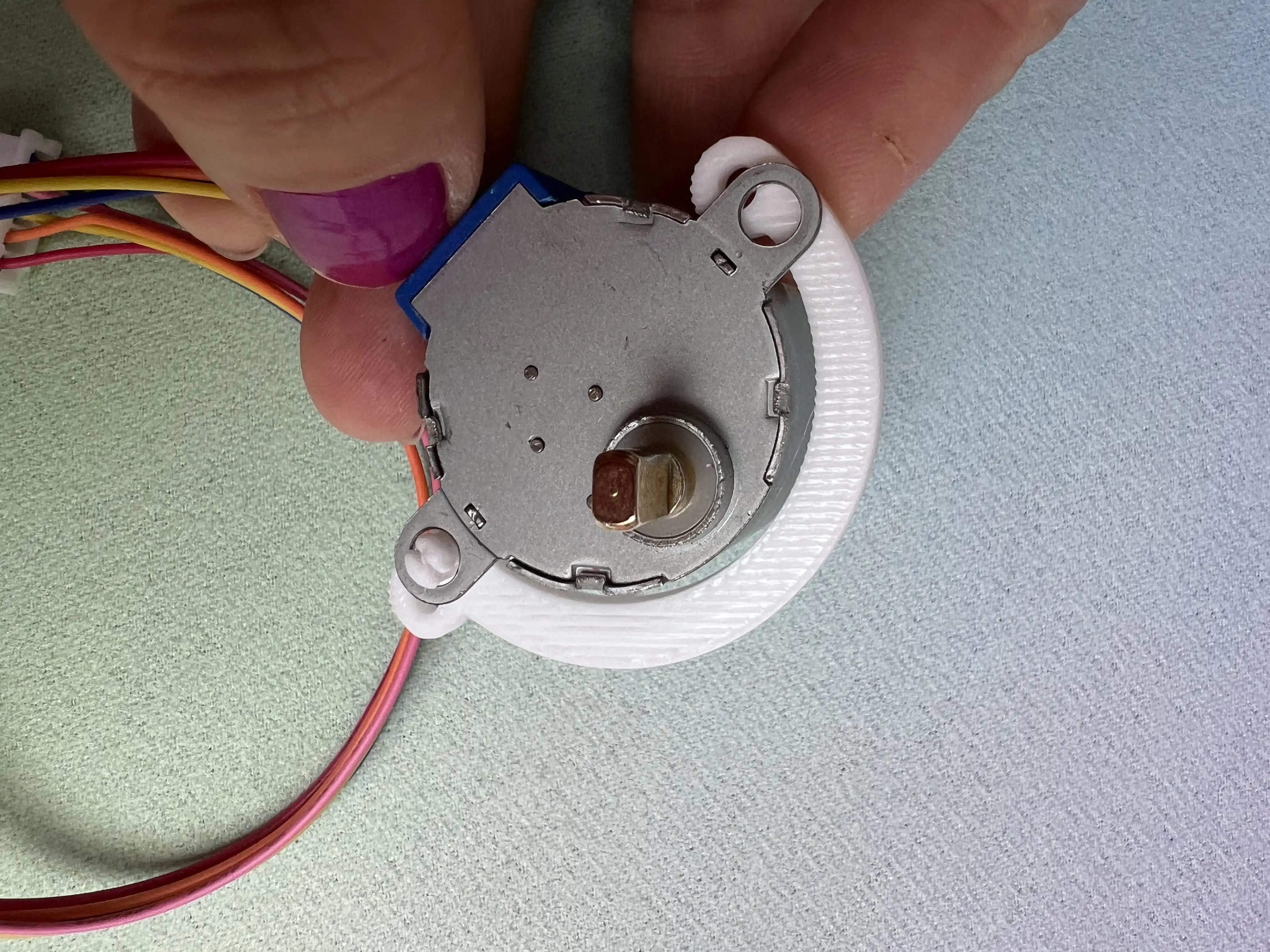 prototype28BYJ-48 — An OS20 Motor AdapterA small U-shaped bracket adapts the mounting holes of a 28BYJ-48 stepper motor to a 40 mm connection span, testing how commercial components can join the shared 20 mm grid of Artificial Emotion.
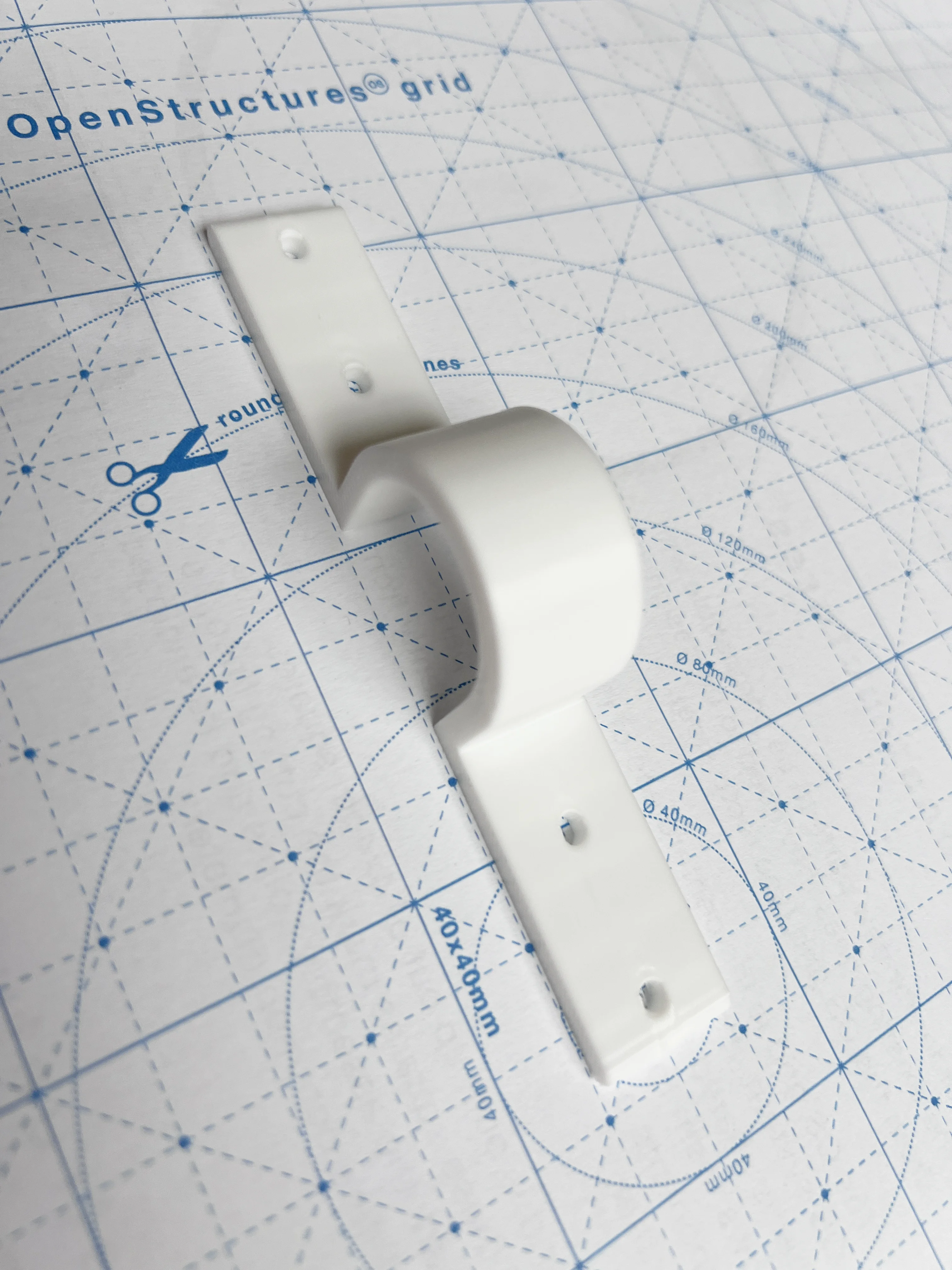 experimentTowards a Modular GridAn ongoing study of a 20 mm modular grid, M3 connections and 3D-printed interfaces for mounting, combining and exhibiting the physical mechanisms of Artificial Emotion.
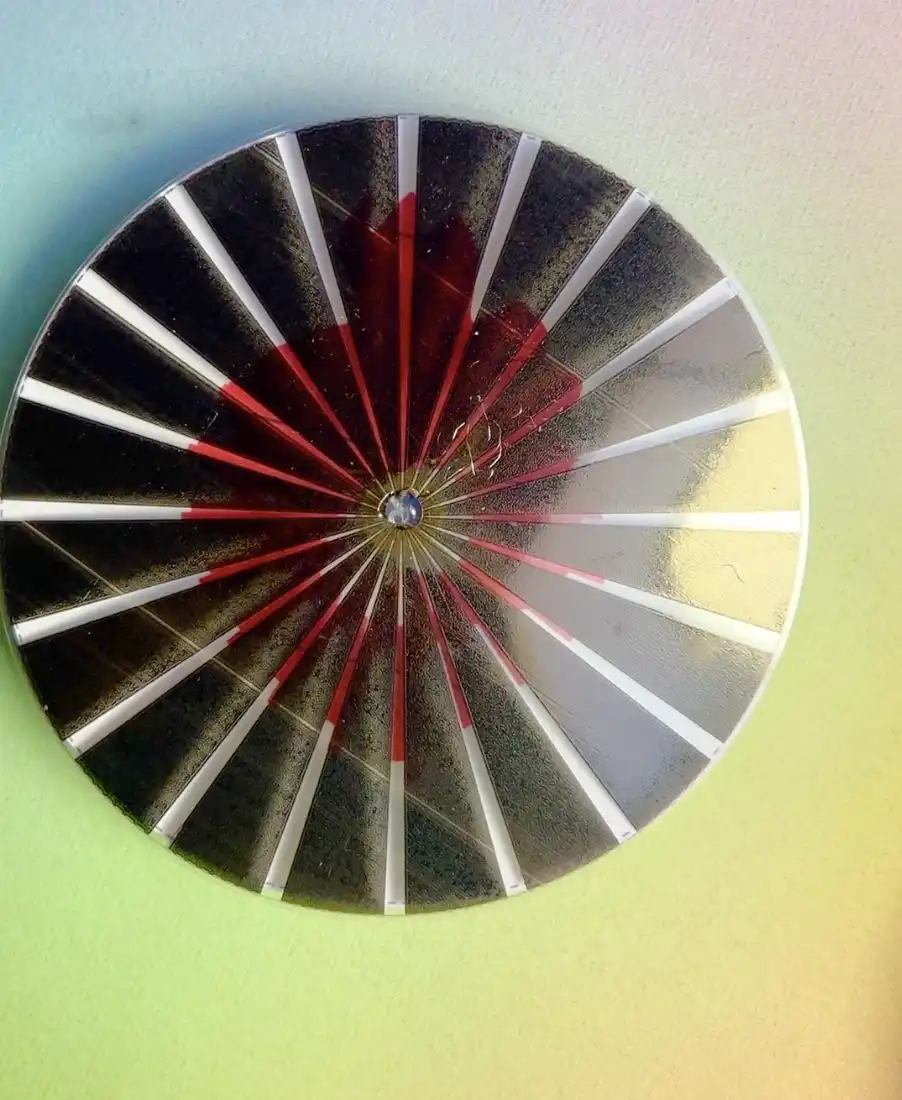 prototypeHeartbeat Slit AnimationA physical animation study using an interlaced anatomical heart and a rotating slit mask driven by the seconds axis of a quartz clock mechanism.
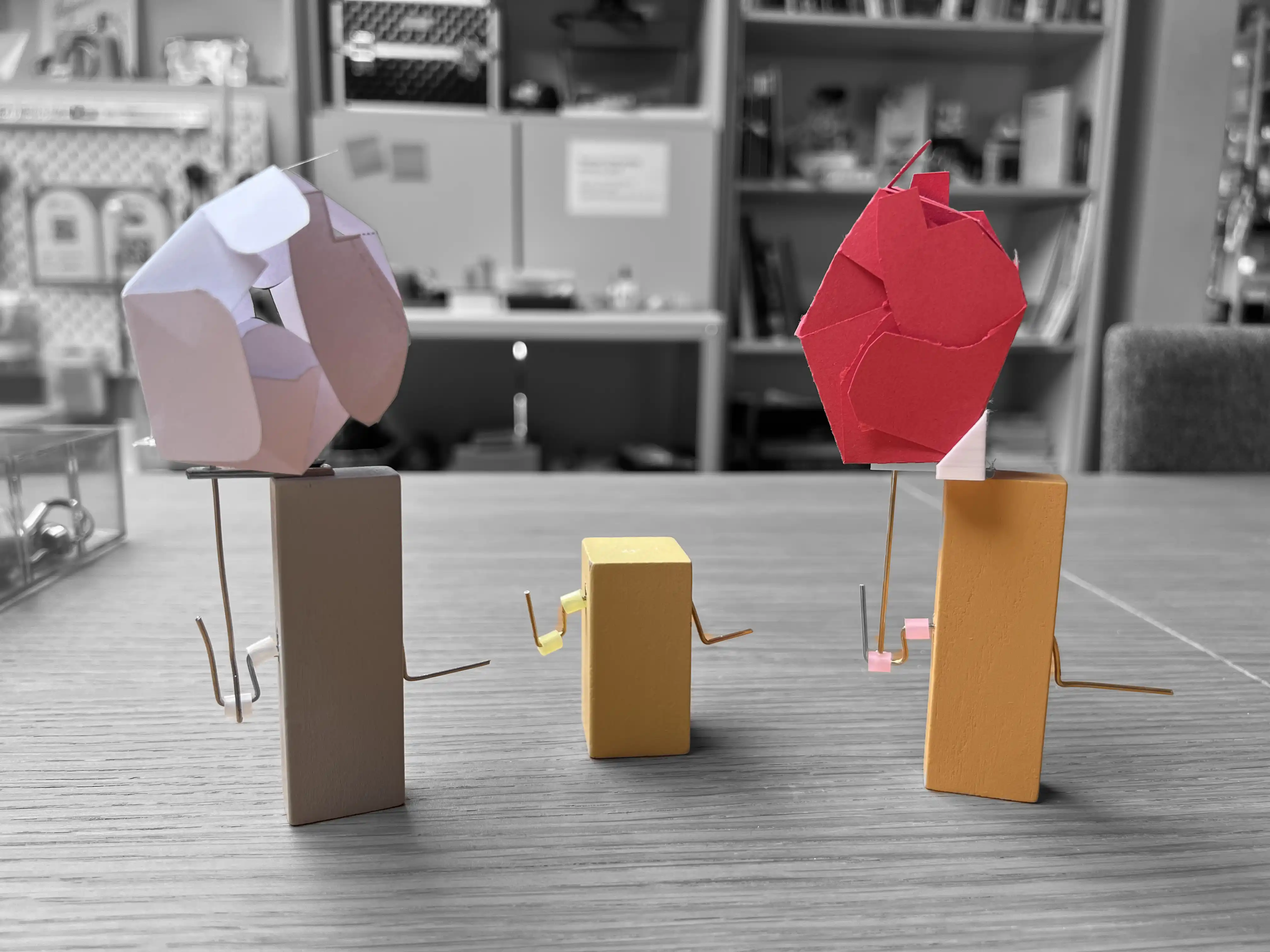 prototypeA Simple CrankA small wood-and-wire crank mechanism revisited from an earlier automata workshop, used here as a simple introduction to rotational and reciprocating movement.
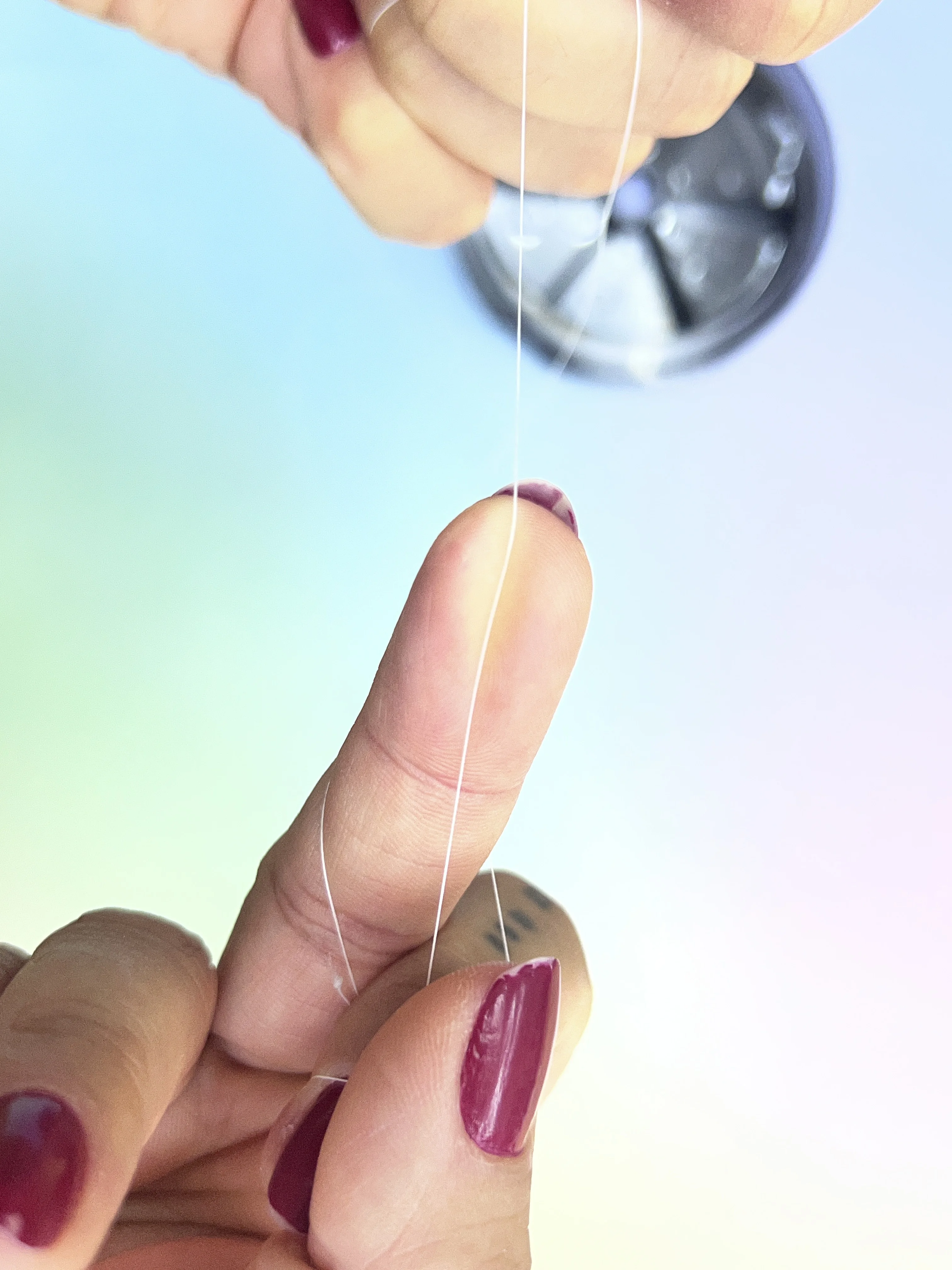 experimentFishing Line as a Mechanical LinkageA study of braided fishing line as a mechanical transmission element in MauMau, comparing line diameter, spool behavior, knotting and rotational attachment.
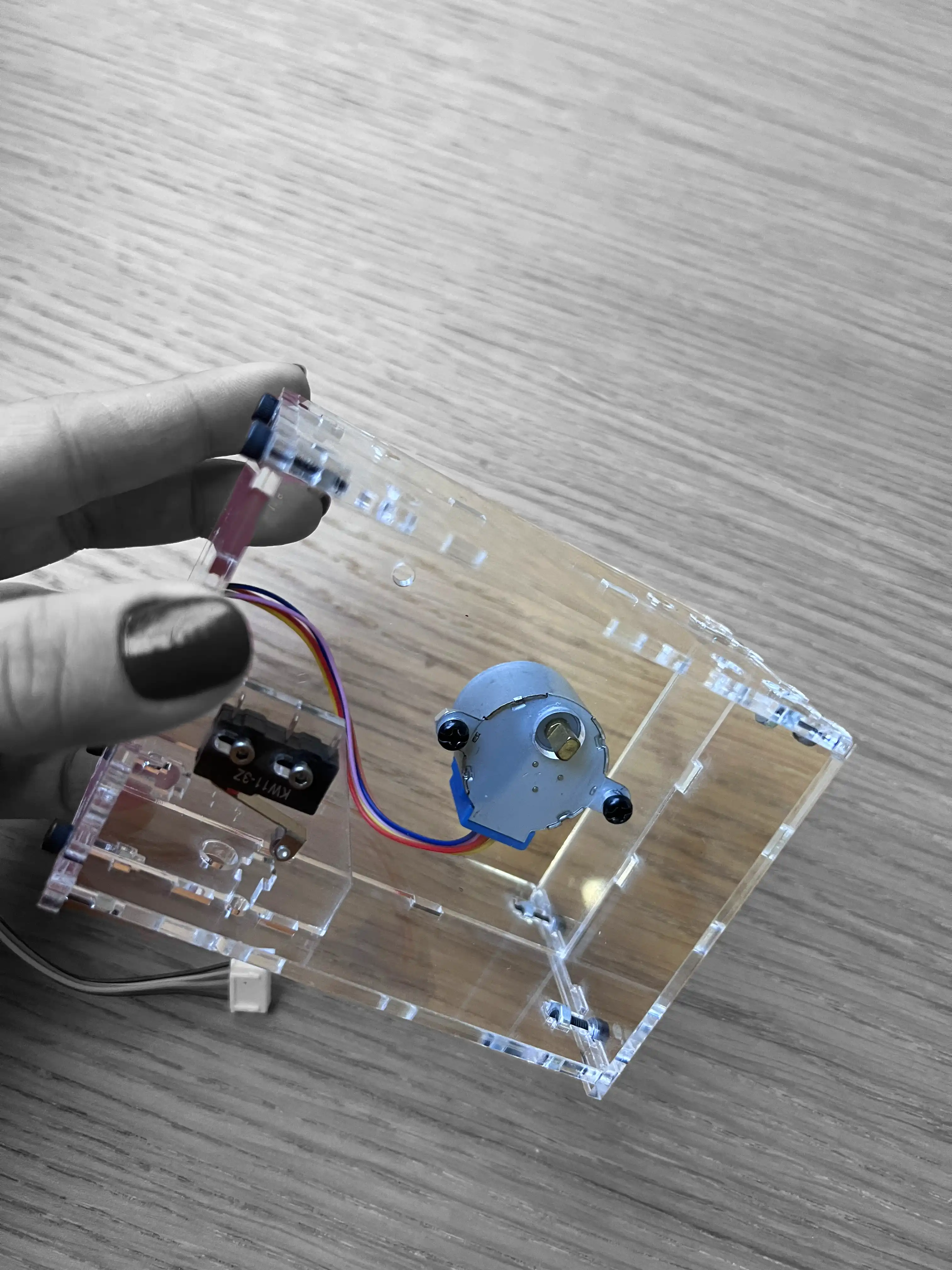 prototypeMauMau — First Parametric EnclosureThe first fabricated MauMau enclosure translated an intuitive cardboard prototype into a parametric, laser-cut acrylic module with removable mechanical joints and dedicated mounting for the kinetic system.
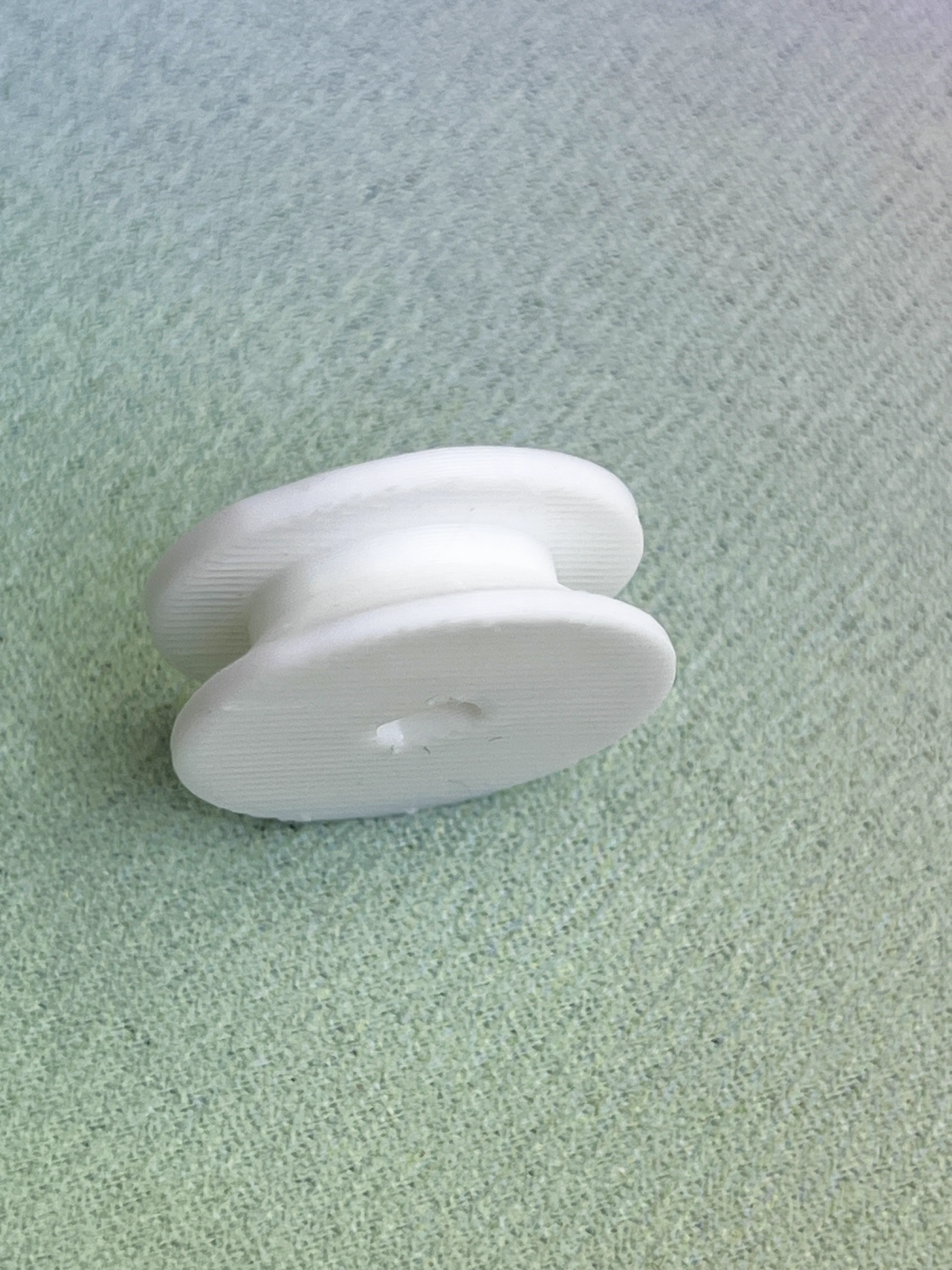 prototypeMauMau Spool — First Parametric PrototypeA first parametric spool for the MauMau kinetic module, designed to couple a 28BYJ-48 stepper motor to braided fishing line and refined for FDM printing and line fixation.
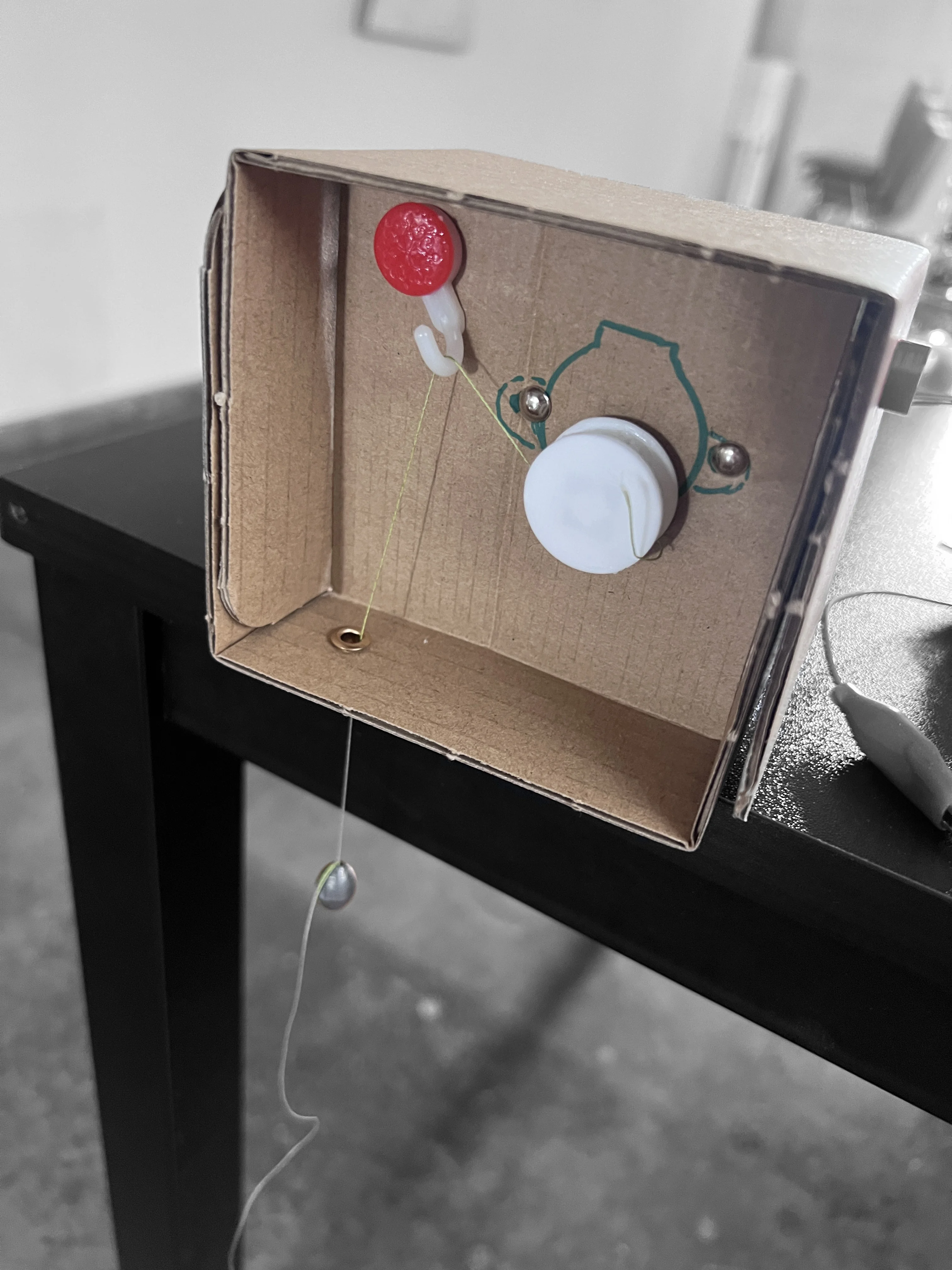 prototypeTwo Hours to a First Kinetic PrototypeA rapid cardboard prototype used to test whether one simple kinetic idea could become a working physical module in only a few hours.
Studio Notes
 reflectionFrom Sculpture to Kinetic Sculpture: Where Does the Machine Begin?A short inquiry into how sculpture became a language of movement, and what distinguishes a kinetic sculpture from an automaton or a machine.
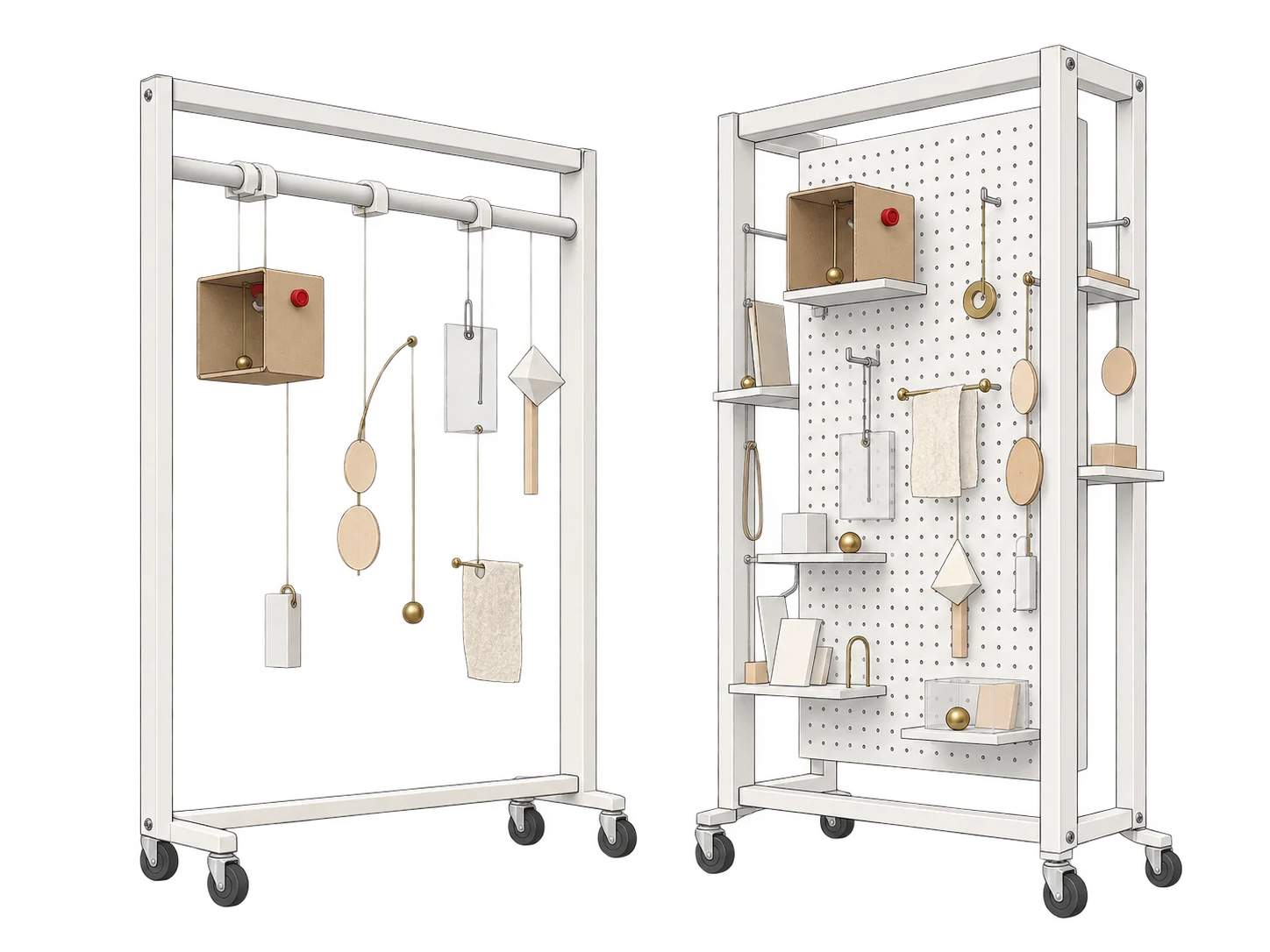 infrastructureA Living Archive of PrototypesA mobile, adaptable archive for the physical experiments of Artificial Emotion — designed to keep prototypes visible, accessible and part of an ongoing research process.
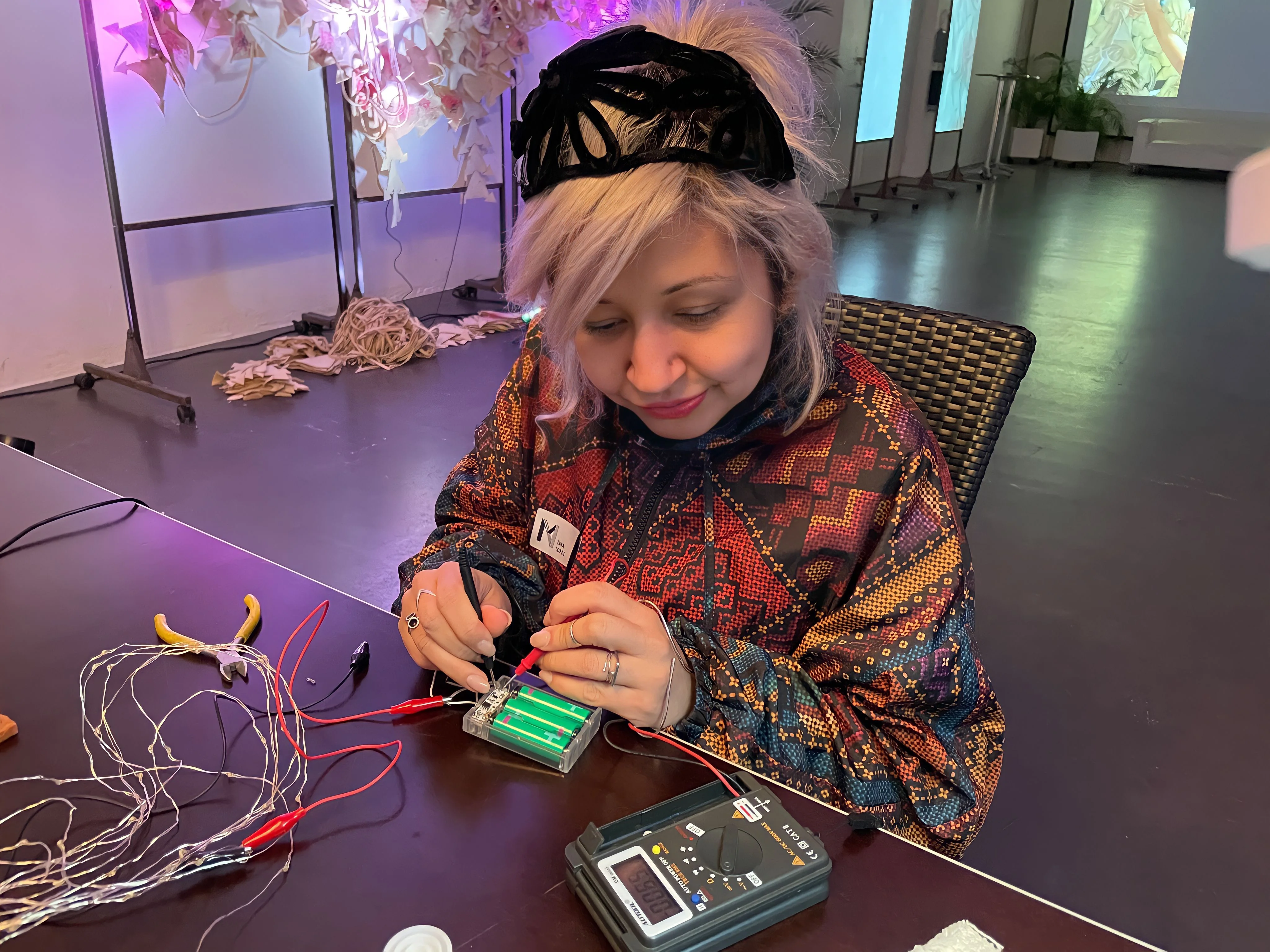 personLina LopesBrazilian artist, creative technologist and educator based in Switzerland, working across kinetic systems, physical computing, artificial intelligence, interactive environments and experimental forms of learning.
 institutionSchool of Tomorrow's AIAn independent art, technology and creative-learning initiative founded by Lina Lopes in Wetzikon, Greater Zurich — and the main Swiss research base of Artificial Emotion.
 store resourceHRH Fishing HebeisenA fishing-supply store in Wetzikon that has become a nearby source for braided line, swivels, beads, knots and small mechanical techniques useful to kinetic work.
 softwareRavenAn AI-assisted CAD tool for Rhino and Grasshopper that became part of my parametric design workflow during the development of Artificial Emotion.
 institutionInstitute for Future TechnologiesA research and teaching environment in Paris where a week of making, teaching and conversation around Sensitive Machines became one of the starting points for Artificial Emotion.
References
 artistAbraham PalatnikA Brazilian artist and inventor whose experiments with motors, light, mechanical transmission and time transformed painting into a kinetic system — a technical and perceptual reference for Artificial Emotion.
 artistAlexander CalderAn American sculptor and inventor whose wire circus, motor-driven abstractions and suspended mobiles transformed movement, balance, gravity, air and time into sculptural materials — a historical and methodological reference for Artificial Emotion.
 artistBruno MunariAn artist, designer and educator whose experiments with movement, machines, rules and perception offer a methodological reference for Artificial Emotion.
 artworkObjeto Cinético C-15 — Abraham PalatnikA kinetic object in which guided metal elements, motors, magnets, layered movement and shadows turn mechanical precision into a delicate spatial choreography.
 artworkOra X — Bruno MunariA kinetic clock experiment in which transparent colored elements attached to a clock mechanism continuously generate new compositions through time.