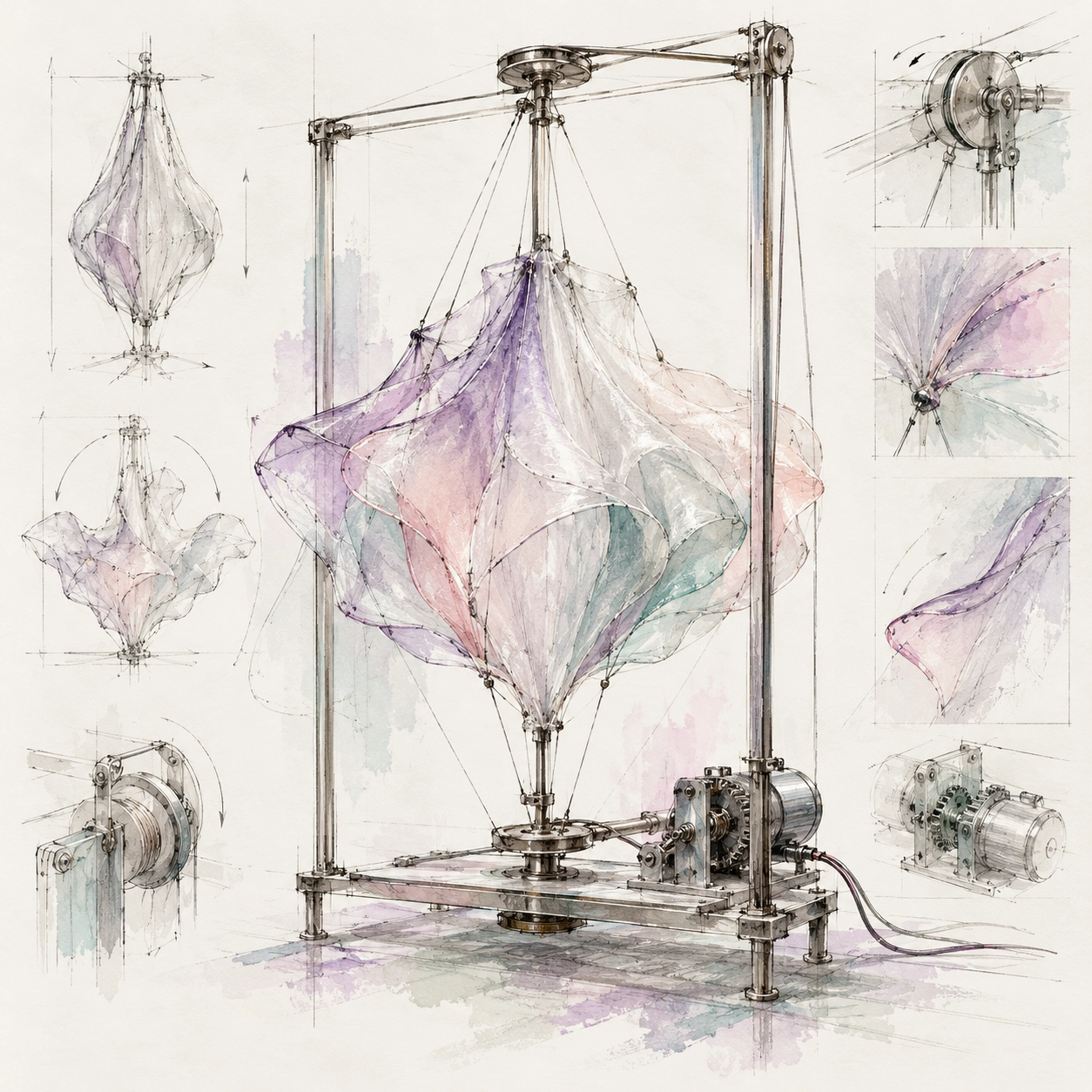
Soft Mechanics
From wearable electronics to kinetic textile bodies
An artistic research thread investigating how textile structures can become mechanical systems capable of producing volume, movement and expressive behaviour.
Research questions
- Q1
How can textile structures become mechanical systems capable of producing controlled but expressive movement?
- Q2
What happens when knowledge developed through wearable electronics is transferred from clothing the human body to constructing soft kinetic bodies?
Process
- Textile
- Structure
- Force
- Movement
- Behaviour
From body to technological body
Soft Mechanics marks a new phase in a line of research I have pursued for more than fifteen years through wearable electronics, soft interfaces and body-based technologies.
My first artistic formation was rooted in theatre and performance. The body therefore entered my practice before technology did: as presence, character, identity and a site of transformation.
Technology was also present early in my life. I began studying programming and databases as a teenager, encouraged by my mother, who was trained in physics and understood computation as a fundamental language of the future.
These two trajectories — body and technology — gradually converged.
In 2010, I was trained in wearable electronics and e-textiles by Hannah Perner-Wilson and Mika Satomi of How To Get What You Want, during one of the early wearable-textile workshops held in São Paulo. Since then, conductive materials, soft electronics, wearable interfaces and responsive textiles have remained a continuous part of my practice.
This research also developed into NANA, a framework I created for performative wearables, bringing together body, character, interaction, soft circuits and physical prototyping.
In this earlier body of work, textile generally acted as an interface attached to or worn by the human body.
Soft Mechanics shifts this relationship.
Soft Mechanics shifts the relationship
Instead of asking how technology can inhabit a textile worn by a human body, I am interested in what happens when the textile itself becomes the body of a technological object.
A fold can distribute force.
A seam can determine where a surface contracts.
A thread pulled by a motor can transform a plane into volume.
Multiple points of tension can produce twisting, breathing, trembling or collapse.
The aim is not to treat textiles as decorative surfaces around a mechanism, but to understand textile construction itself as part of the mechanism.
This creates a different material question:
How can softness become structure, force transmission and movement at the same time?
Research process
The research develops through five connected stages:
Textile → Structure → Force → Movement → Behaviour
Each stage changes the next.
A material choice affects how a structure can be formed.
A structure determines how force travels through the object.
Force produces movement.
Movement is perceived as behaviour.
The research moves repeatedly back and forth across this chain rather than following it only once.
Textile transformation
I am investigating textile techniques that generate volume, tension, structure and deformation.
Current areas of experimentation include:
- smocking
- pleating and folding
- gathering
- structural stitching
- corsetry-inspired construction
- internal supports and boning
- organza, tulle, mesh and other translucent or semi-rigid materials
- elastic and tension-responsive textiles
- conductive materials where relevant
The focus is not decorative surface treatment, but the mechanical behaviour of each construction.
Questions include:
- How does a folded textile respond to compression?
- Where does a smocked surface contract?
- How does an internal support alter deformation?
- Which structures can move repeatedly without collapsing?
Actuation and force
Selected textile structures are connected to kinetic systems.
Experiments include:
- motors and servos
- stepper motors
- spools and small winches
- thread, cable and filament
- opposing tension systems
- elastic return
- springs
- gravity
- counterweights
The artistic question is not simply which mechanism works most efficiently, but what kind of gesture each material–mechanism relationship produces.
A mechanism is useful here not only because it functions, but because of the behaviour it makes possible.
A vocabulary of soft movement
One aim of the research is to develop a vocabulary that connects physical action to perceived behaviour.
Examples include:
- single pull → contraction
- opposing pulls → torsion
- distributed tension → expansion / breathing
- rapid small movements → trembling
- slow release → relaxation or collapse
Through repetition and observation, I am investigating how force, material and rhythm combine to produce gestures that can be perceived as bodily or expressive.
This vocabulary is not intended as a fixed taxonomy. It is a working language that can grow as new mechanisms and material behaviours are tested.
Research objects
Soft Mechanics develops through a series of small functional prototypes rather than through one finished sculpture.
These prototypes operate as research objects: physical experiments through which material, movement and perception can be tested together.
Together they form a growing Soft Mechanics Library, including:
- textile structure samples
- material studies
- kinetic mechanisms
- tension and actuation systems
- functional soft kinetic prototypes
- movement tests
- diagrams
- photographic and video documentation
- notes on failed experiments
- unexpected behaviours
The Library is not a separate collection from the research itself. On this site, the Studies connected to the Soft Mechanics thread gradually become its public, evolving record.
Connection to Artificial Emotion
Soft Mechanics is directly connected to Artificial Emotion, but it is broader than the development of a single artwork.
Artificial Emotion explores how movement, soft mechanisms, sensing and bodily signals can produce expressive mechanical behaviour. Soft Mechanics focuses specifically on the material and mechanical language needed for soft kinetic bodies.
The objective is to establish a vocabulary of soft structures that can later be applied to Artificial Emotion and to future sculptural works.
One selected system from this research will inform the further development of a kinetic textile heart within Artificial Emotion.
In that sense, Soft Mechanics functions both as an independent research thread and as one of the material foundations of the larger project.
Current research period
Soft Mechanics is an active research thread.
A more concentrated research and development period is planned from January to June 2027, during which the Soft Mechanics Library will be expanded through material studies, mechanical tests and functional prototypes.
The work will take place primarily at School of Tomorrow's AI in Wetzikon, Switzerland, with continued exchange through the Institute for Future Technologies (IFT), De Vinci Higher Education, Paris.
The intention is to culminate this phase with a public presentation at IFT in June/July 2027, sharing selected studies, kinetic prototypes and findings as research in progress rather than as finished works.
The aim is not to resolve a final artwork prematurely.
It is to build a material language through repeated making, observation and failure.
Textile becomes structure, mechanism and moving body at once.
Studies
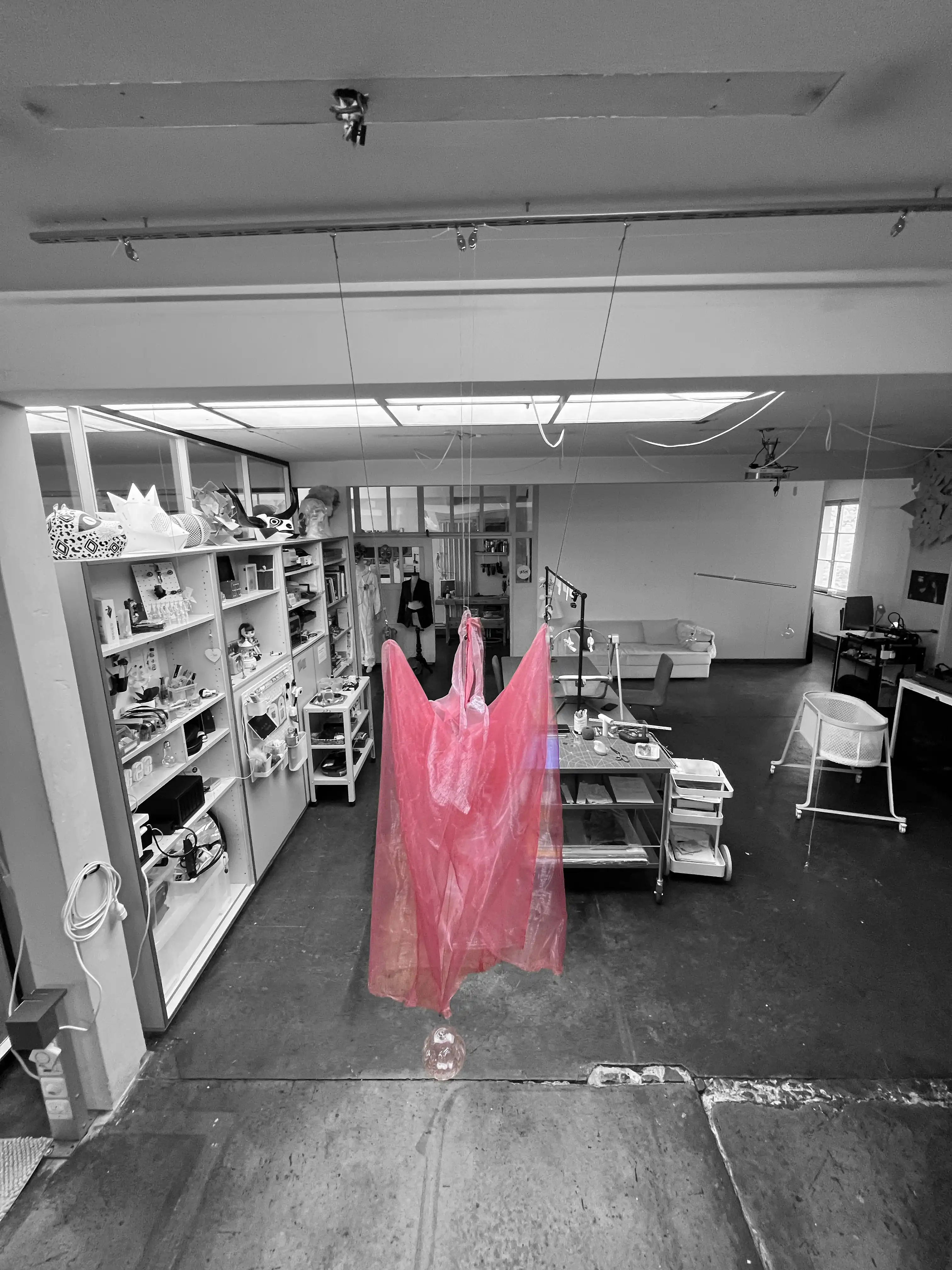 experimentCounterweighted Textile MechanismAn experimental organza structure uses two independently routed pulley-and-counterweight lines, a fixed waist, and an adjustable link between its moving upper and lower sections to explore textile contraction and expansion.
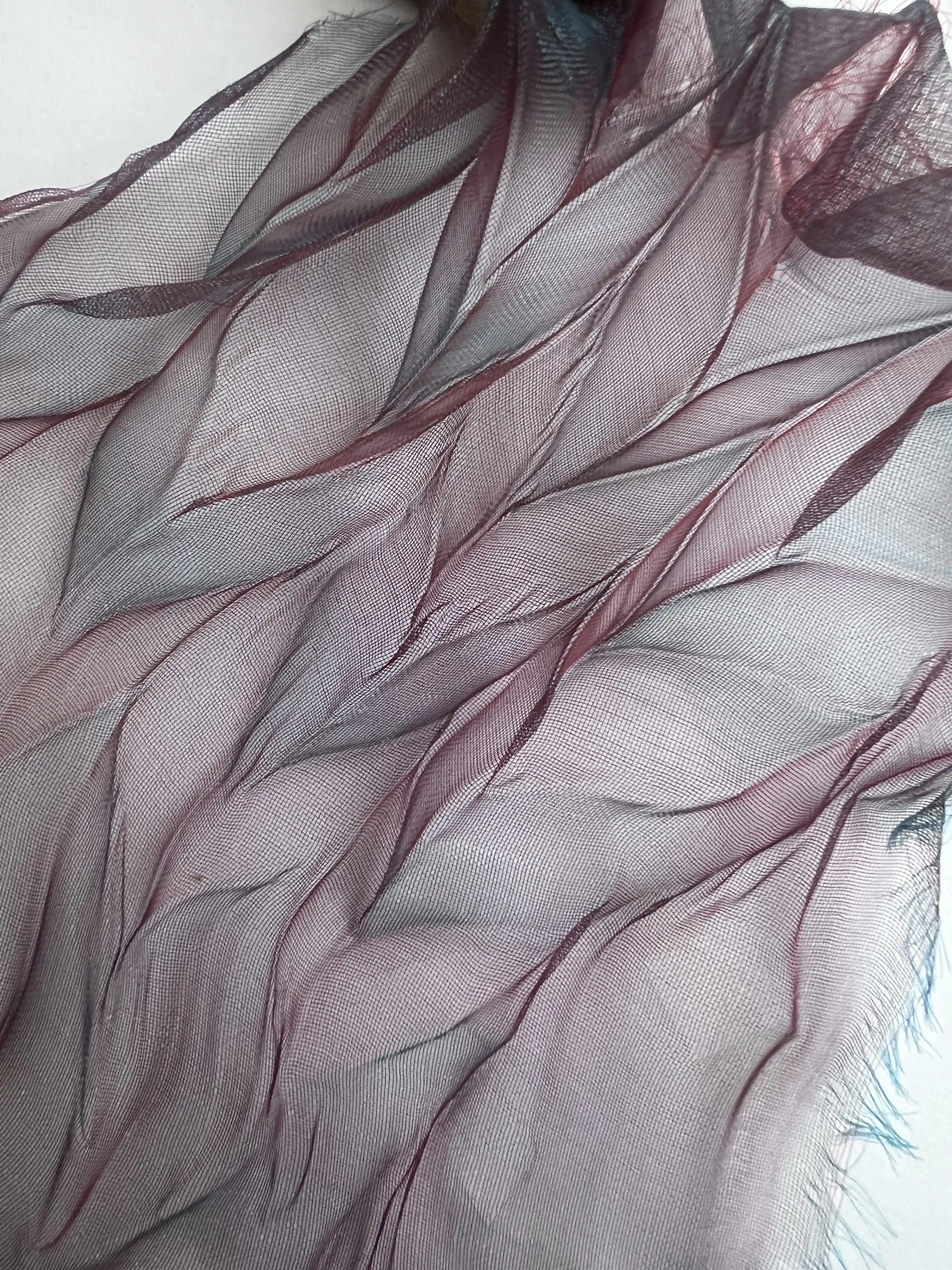 experimentMiura-ori in OrganzaA first test of heat-setting polyester organza between hand-folded Miura-ori paper molds, exploring how a textile surface can retain folds while remaining able to expand and contract.
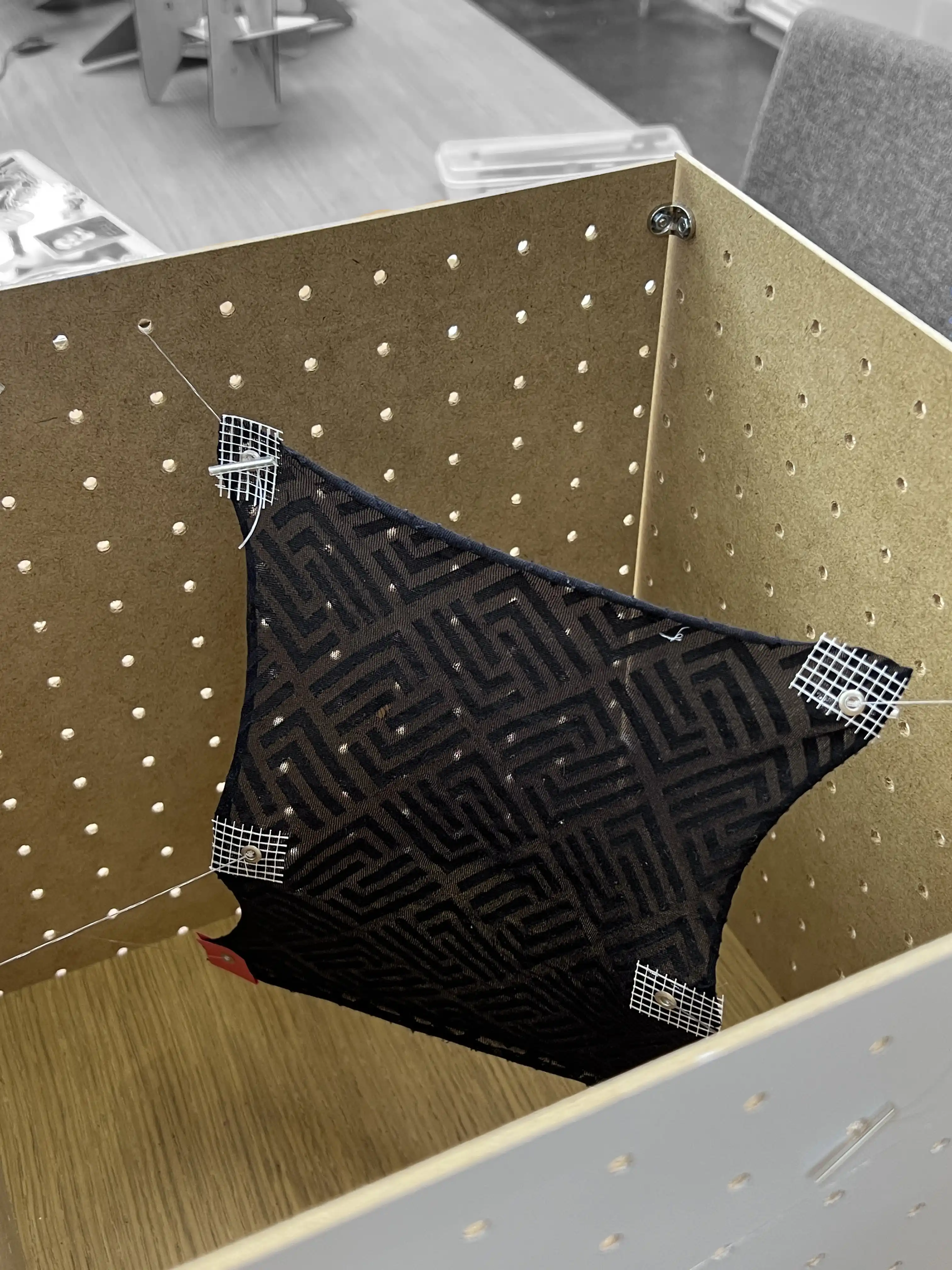 experimentA Membrane Under TensionAn exploratory test of how a thin, elastic textile surface deforms under hand-applied tension, using found workshop materials and reversible connections to make iteration easier.
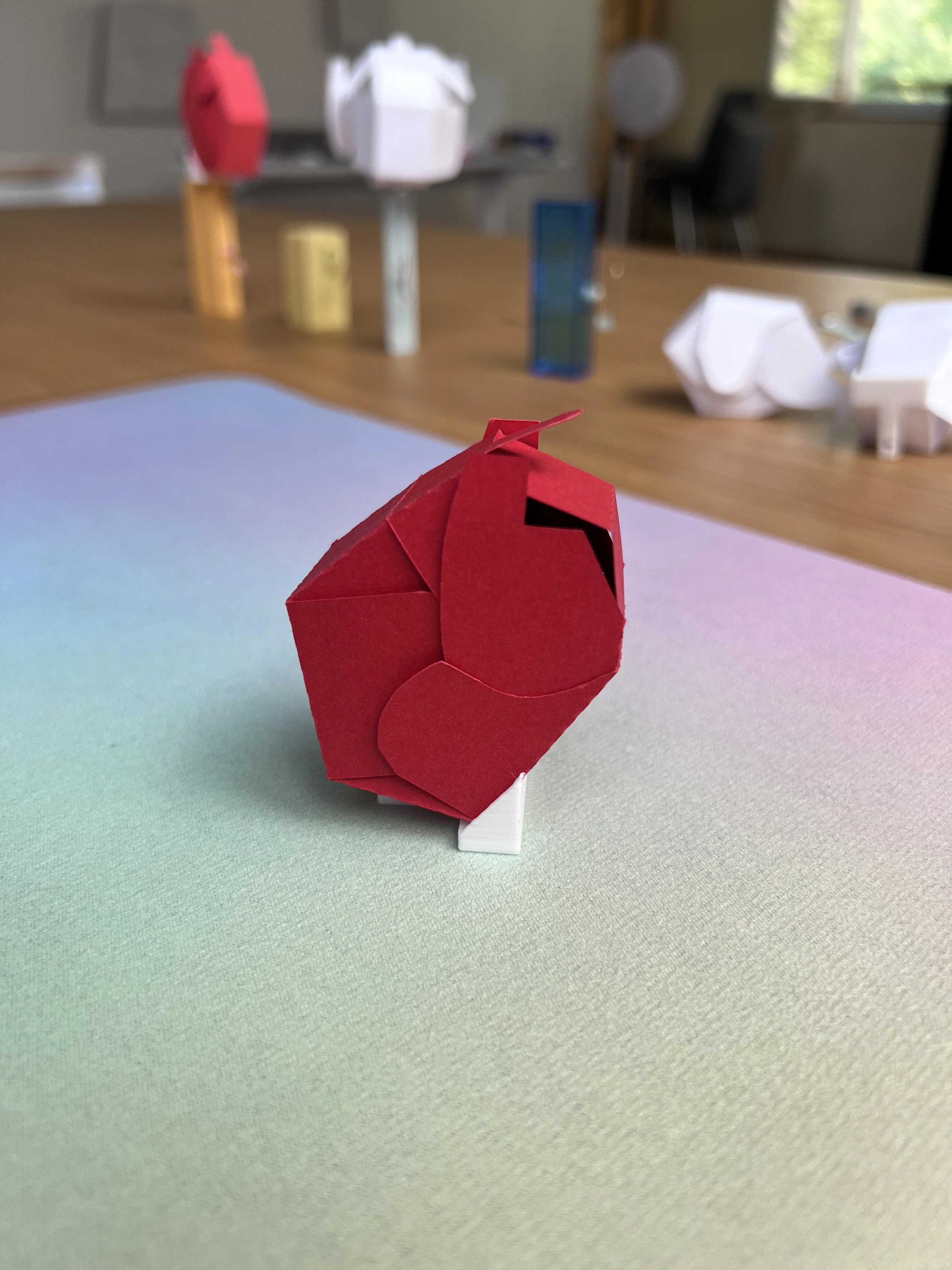
- experimentPaper HeartA paper study exploring how folding transforms a flat, flexible material into a three-dimensional form capable of movement.
Studio Notes
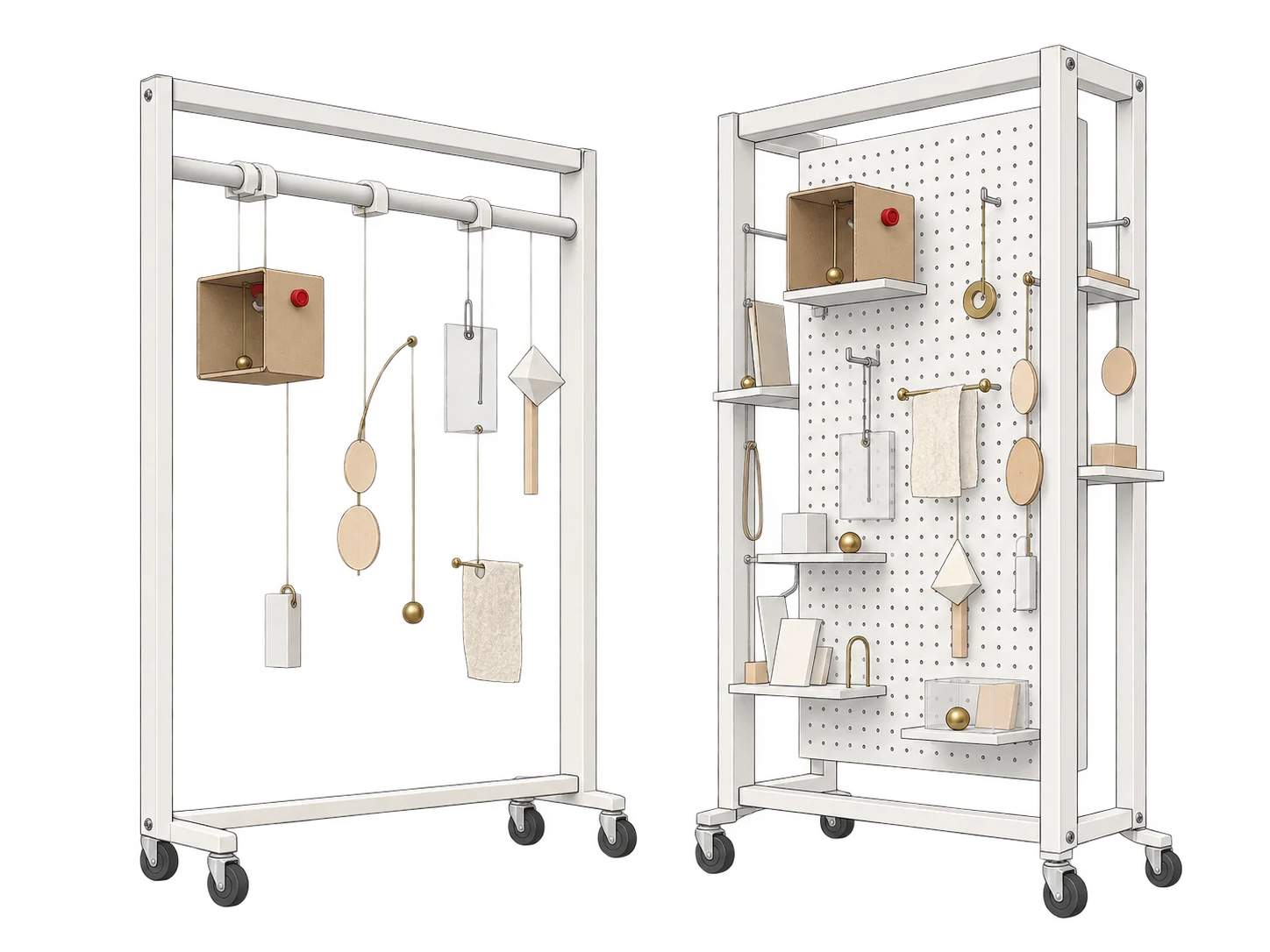 infrastructureA Living Archive of PrototypesA mobile, adaptable archive for the physical experiments of Artificial Emotion — designed to keep prototypes visible, accessible and part of an ongoing research process.
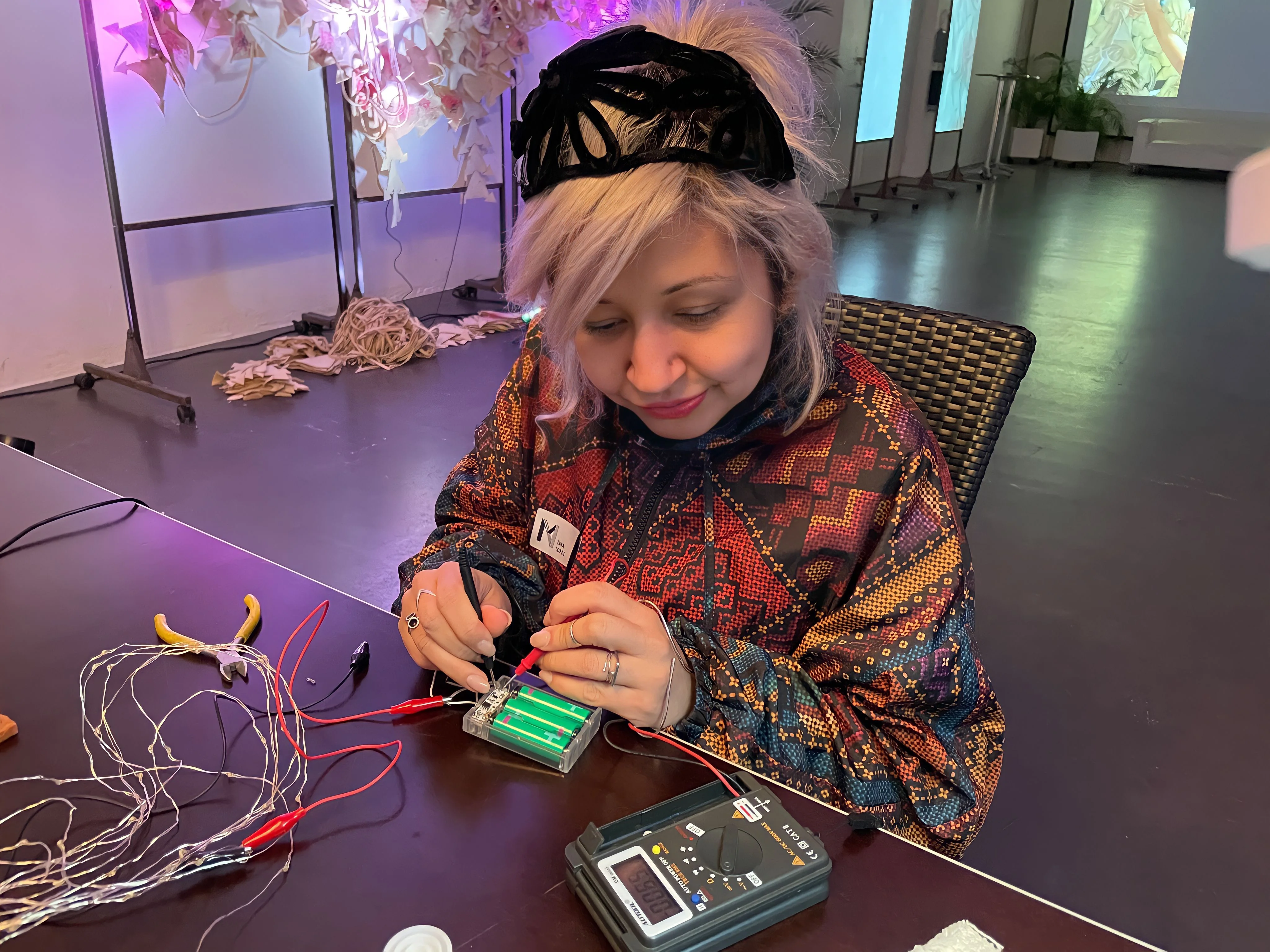 personLina LopesBrazilian artist, creative technologist and educator based in Switzerland, working across kinetic systems, physical computing, artificial intelligence, interactive environments and experimental forms of learning.
 institutionSchool of Tomorrow's AIAn independent art, technology and creative-learning initiative founded by Lina Lopes in Wetzikon, Greater Zurich — and the main Swiss research base of Artificial Emotion.
 institutionInstitute for Future TechnologiesA research and teaching environment in Paris where a week of making, teaching and conversation around Sensitive Machines became one of the starting points for Artificial Emotion.
References
 researchFrom Paper Molds to Folded TextilesThree complementary references on hand-folded, heat-set textiles, from an accessible paper-mold tutorial to origami fashion research and Reiko Sudō's Origami Pleats.
 artworkKinetic MembranesAn early interactive textile installation by Dionysus Cho, developed at Yale School of Architecture, in which motor-driven cables transform stretched nylon membranes into changing three-dimensional volumes.
 researchTropisme — Chloé BensahelAn ongoing investigation into woven soft robotics, botanical movement and human–plant interaction, considered alongside Bensahel's earlier research into textiles as carriers of code and memory.